
Material Guide · Tucson, AZ
Compare Stone Countertop Types in Tucson
Quartz, granite, marble, quartzite, and terrazzo each perform differently under heat, water, and daily use. Here's how to tell them apart before you commit to a slab.
At a Glance
Which Stone Countertop Is Right for You?
A quick side-by-side before you dive into the details below. Every project is different, so treat this as a starting point — our team can walk through specifics for your kitchen or bathroom.
| Material | Type | Durability | Maintenance | Heat Resistance | Best For |
|---|---|---|---|---|---|
| Quartz | Engineered | Very High | Low — no sealing | Good (avoid direct high heat) | Busy kitchens, consistent color |
| Granite | Natural | Very High | Moderate — periodic sealing | Excellent | Cooktops, one-of-a-kind pattern |
| Marble | Natural | Moderate | Higher — seals, more careful use | Good | Bathrooms, low-acid statement spaces |
| Quartzite | Natural | Very High | Moderate — periodic sealing | Excellent | Marble look, harder-use kitchens |
| Terrazzo | Composite | High | Low to moderate | Good | Bold, fully custom color & pattern |
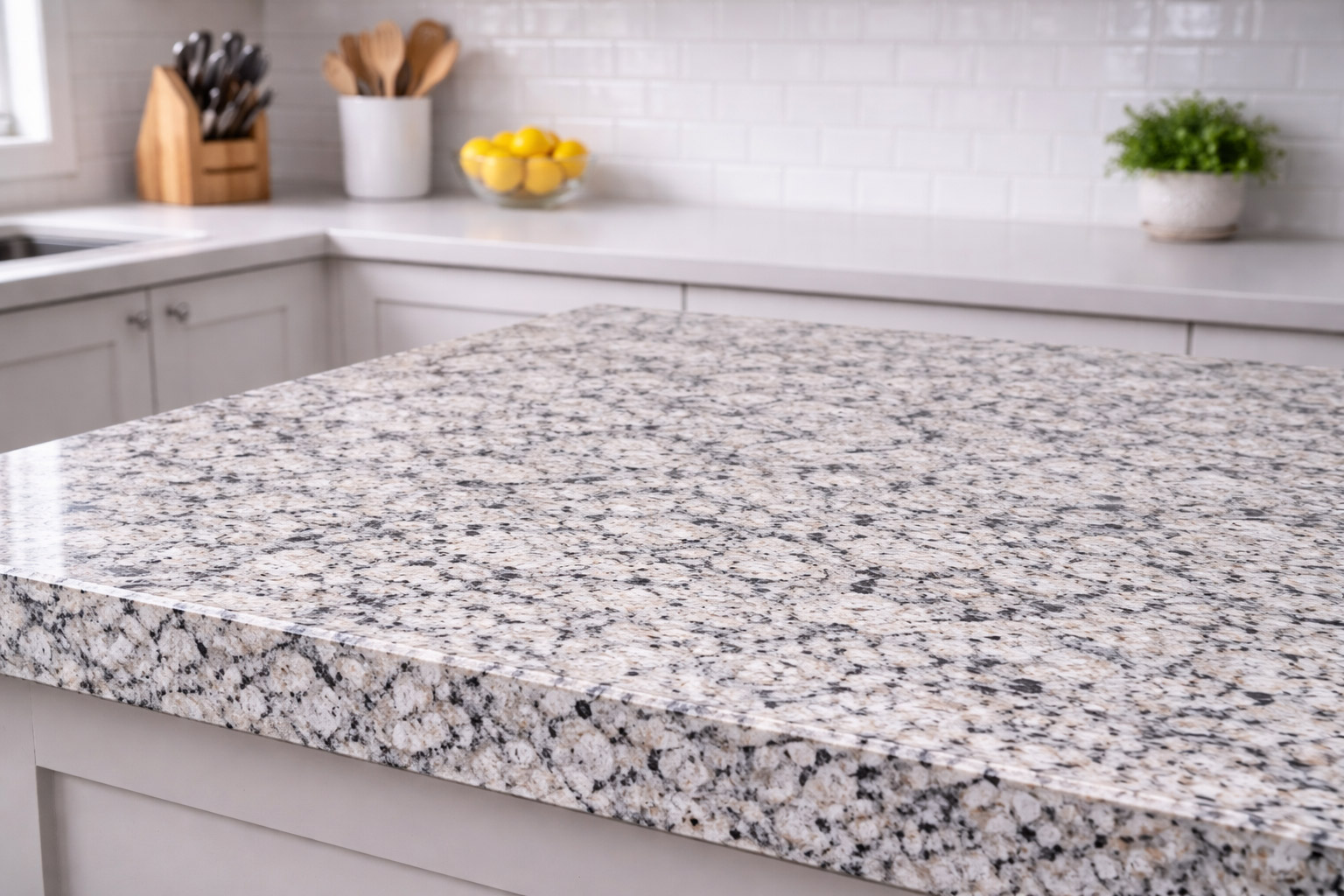
01 — Engineered Stone
Quartz Countertops
Quartz is engineered rather than quarried, blending crushed stone with resin to produce consistent color and pattern that natural slabs can't guarantee. It's non-porous, so it resists stains and bacteria without sealing, which makes it a low-maintenance pick for busy kitchens and bathroom vanities.
Modern quartz can convincingly mimic granite or marble veining, so you can get a natural-stone look with more predictable upkeep. The tradeoff: it handles everyday heat fine, but very hot pans straight off the stove can still cause damage, so a trivet is still worth keeping around.
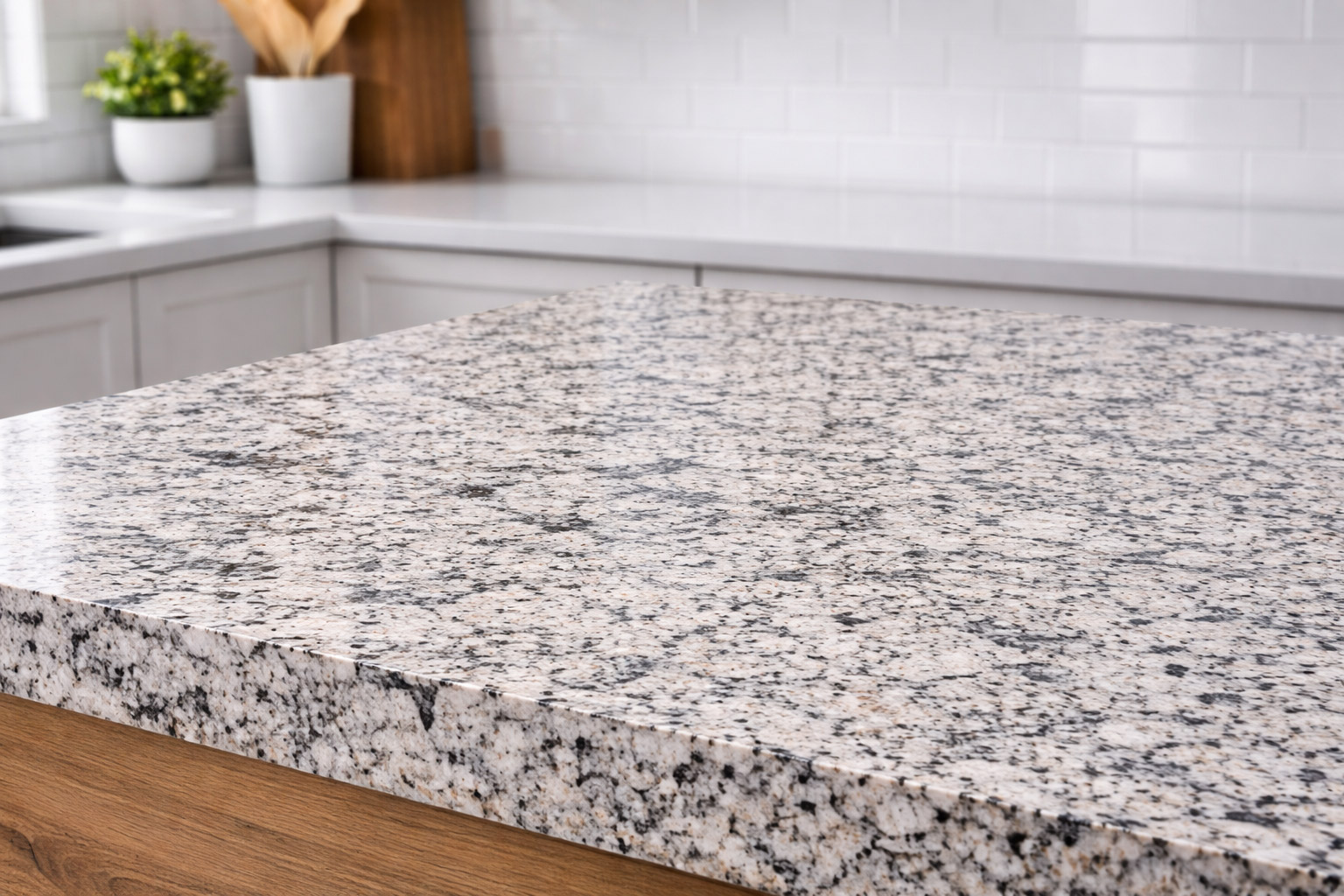
02 — Natural Stone
Granite Countertops
Granite is quarried, not manufactured, so every slab carries its own pattern — no two installations look quite the same. It's formed under intense heat and pressure, which is exactly why it holds up so well against hot cookware and daily wear in a working kitchen.
Colors range from quiet, consistent tones to bold, high-movement patterns, so it suits homeowners who want a countertop with real character. It does benefit from periodic sealing to stay stain-resistant, something our team will walk you through after install.
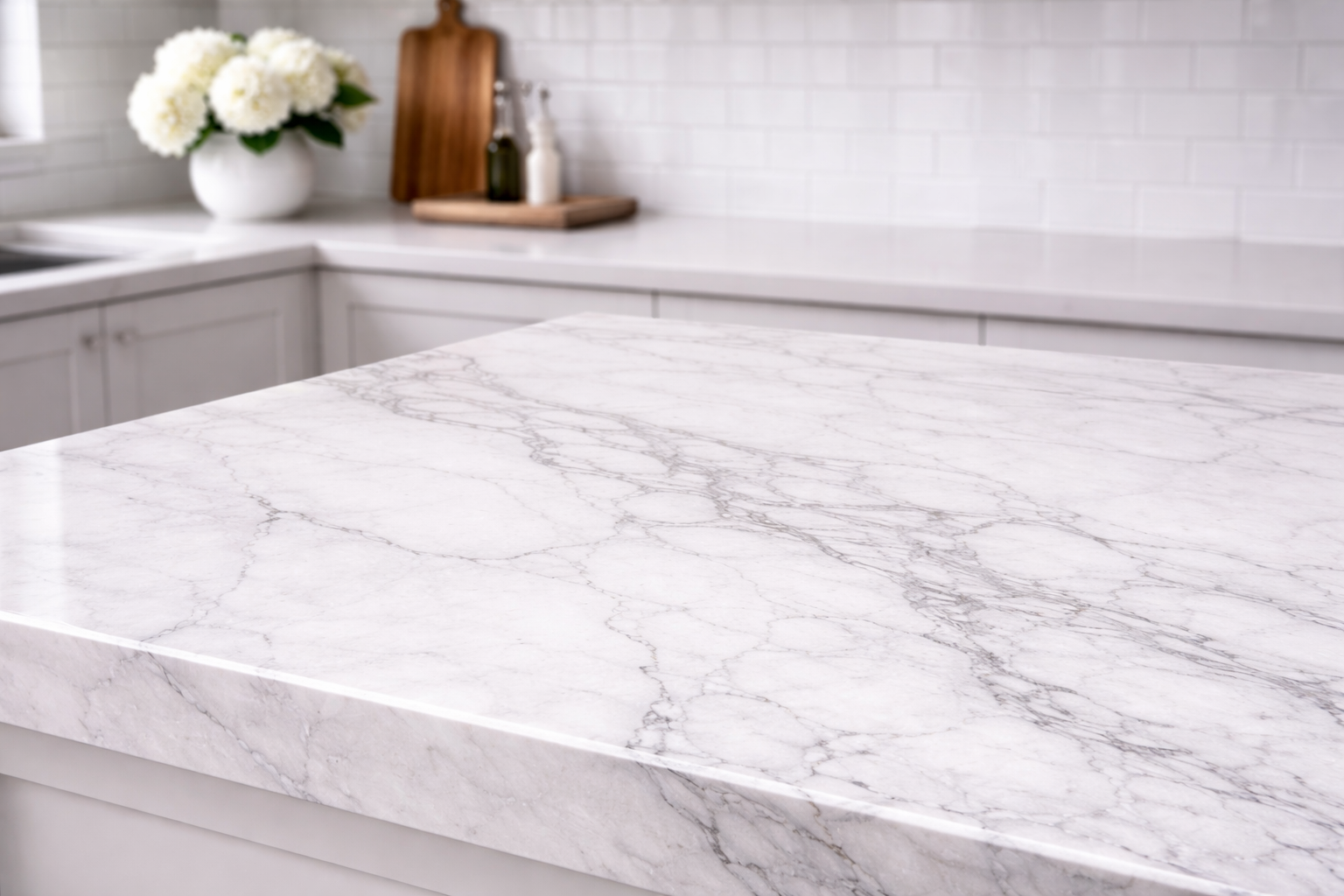
03 — Natural Stone
Marble Countertops
Marble has been a symbol of high-end design for thousands of years, and its soft, flowing veining is still hard to replicate. It brings an elegant, timeless look to kitchens, bathrooms, and custom spaces where appearance leads the decision.
It's more porous than granite or quartz, so it's more prone to etching from acidic foods like citrus or wine if left unsealed. With regular sealing and a bit more day-to-day care, marble holds its beauty for years — it's a better fit for bathrooms and lower-traffic surfaces than a hard-use family kitchen.
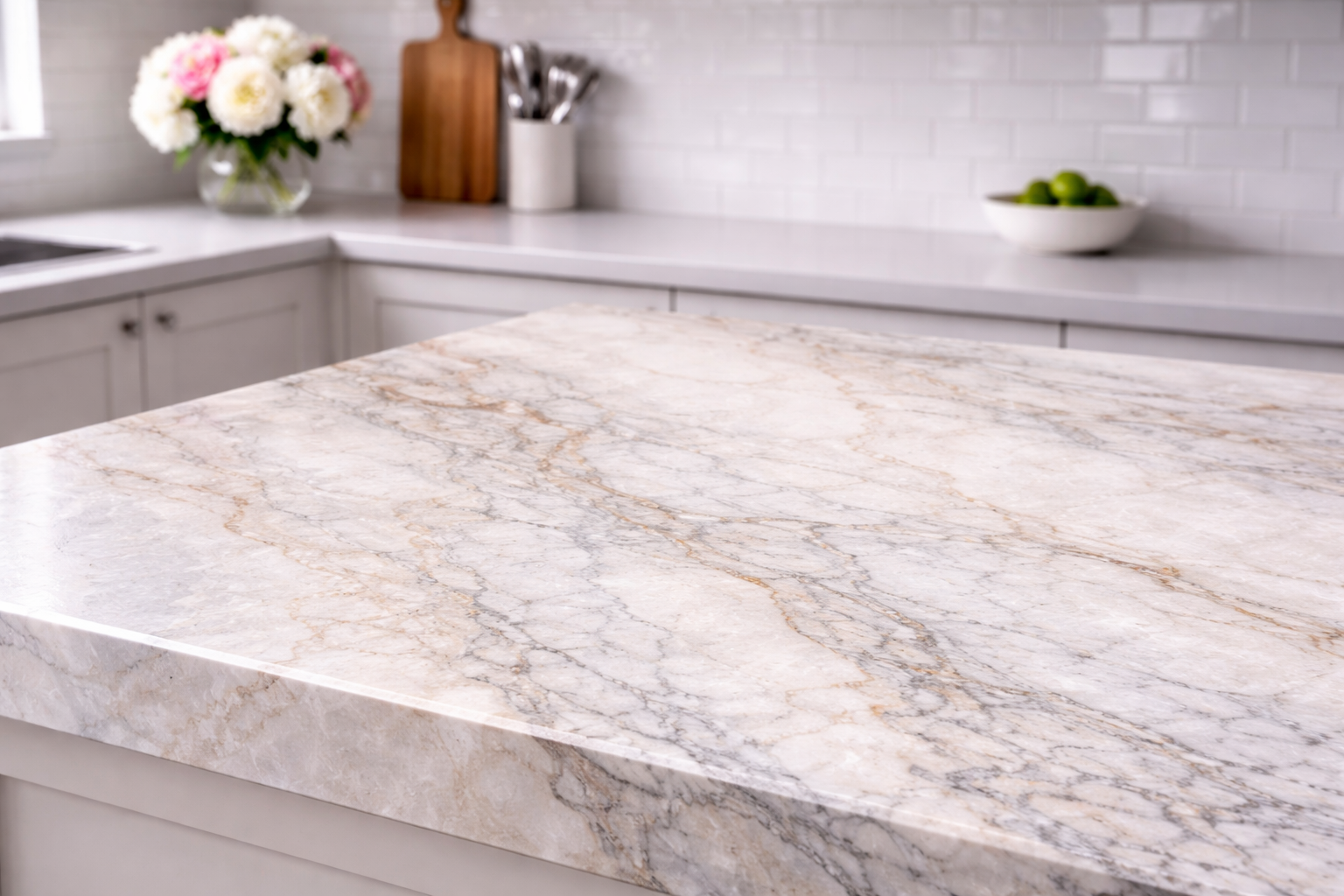
04 — Natural Stone
Quartzite Countertops
Quartzite forms when sandstone is compressed under extreme heat and pressure, and the result is a natural stone that's harder than granite and highly resistant to both scratching and heat. It's a strong fit for a kitchen that gets used hard, every day.
Because it often carries marble-like veining, quartzite is a popular way to get that classic look without marble's higher-maintenance downsides. Like granite, it benefits from periodic sealing, and every slab is genuinely one of a kind.
05 — Composite Stone
Terrazzo Countertops
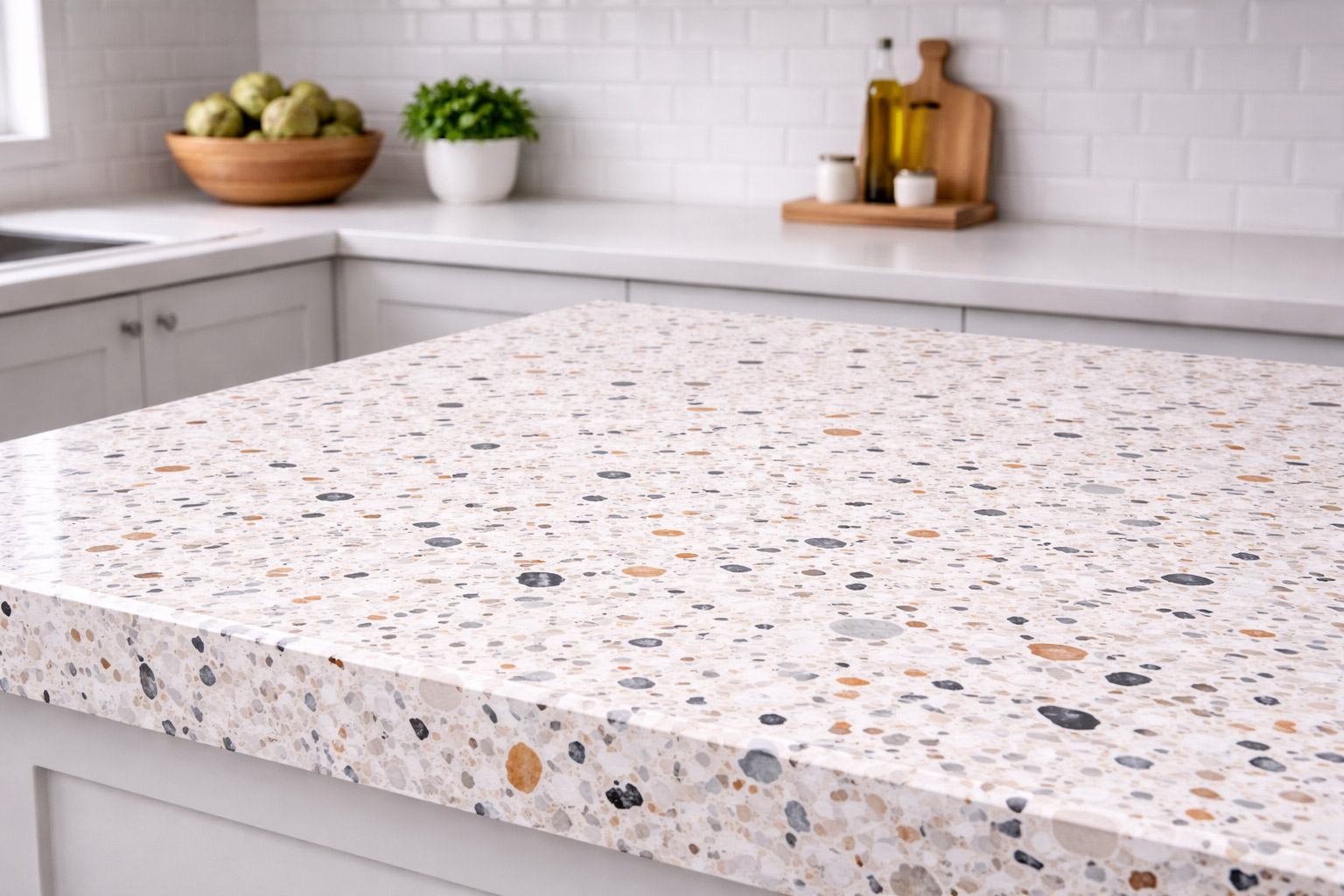
Terrazzo is made by setting chips of marble, quartz, granite, or glass into a cement or resin base, producing a speckled, highly customizable surface. It's as much a design decision as a material one — color, chip size, and density can all be tailored to the space.
Properly sealed, terrazzo holds up well against stains and scratches and works in both modern and classic kitchens. If you want a countertop that doesn't look like anyone else's, this is usually where that conversation starts.
See the Process
Fabrication & Installation, In Action
A look at how raw slabs become finished countertops in our Tucson shop — from template to final polish.
Common Questions
Choosing Between Stone Countertop Types
Which stone countertop is the most durable?
Quartz, granite, and quartzite are all excellent for daily wear and resist scratching well. Granite and quartzite additionally handle high heat better than quartz, which can be damaged by very hot cookware placed directly on the surface.
What's the difference between quartz and quartzite?
Despite the similar name, they're different materials. Quartz is engineered from crushed stone and resin, giving it consistent color and no sealing requirement. Quartzite is a natural stone formed from compressed sandstone, offering marble-like veining with excellent hardness, but it needs periodic sealing like granite.
Which countertop needs the least maintenance?
Quartz requires the least ongoing care since it's non-porous and never needs sealing. Granite, quartzite, and terrazzo need periodic sealing to stay stain-resistant, while marble typically needs the most attention due to its higher porosity.
Can quartz look like natural granite or marble?
Yes. Modern quartz manufacturing can closely mimic the veining and movement of granite or marble, giving you a similar look with more consistent color and lower maintenance than the natural stone it's imitating.
Which stone holds up best in Tucson's heat, indoors or out?
For indoor kitchens, quartz, granite, and quartzite all perform well in Tucson's dry climate. For outdoor kitchens or spaces with direct sun exposure, natural stone like granite or quartzite is the better choice — engineered quartz can discolor or warp with prolonged UV and heat exposure over time.
Still Deciding Between Materials?
Bring us your kitchen or bathroom project and we'll help you weigh durability, maintenance, and budget in person.
